

Istituto Europeo di Oncologia
The European Institute of Oncology ( IEO ) is a “comprehensive cancer center” dedicated to adult oncology which offers a full integration between the various areas dedicated to the fight against cancer such as: prevention, diagnosis, treatment, training and education, basic and translational research.The IEO offers a patient-centered and personalized approach to cancer treatment, thanks to its innovative, non-invasive techniques and top-level physicians who work in a multidisciplinary environment.
Breast Cancer
IEO is one of the world’s leading hospitals in breast cancer treatment, with more than 3,500 breast surgical interventions per year, which represents one of the highest numbers of breast cancer patients treated with surgery. The Institute has played a major role in developing innovative techniques, some of which are now considered international standards, including the ROLL technique for non-palpable lesions, sentinel node biopsy, nipple-sparing surgery, immediate breast reconstruction, and one-day surgery.
The work of a multidisciplinary team is the foundation of excellence. All surgical, clinical, and research activities are multidisciplinary. The multidisciplinary team works together to build a dedicated and personalized care pathway for each breast cancer patient. The expertise of the various professionals involved in the management of breast cancer treatment—from the medical oncologist to the surgeon, radiologist, and radiotherapist—is concentrated to achieve optimal results in terms of care, disease control, and quality of life.
The breast surgeon personally manages the follow-up for the majority of patients who have undergone surgery for breast cancer or intraepithelial lesions. Before any treatment, the surgeon performs breast diagnostic exams and determines the appropriate surgical approach or refers the patient to colleagues in Medical Breast Oncology for preoperative treatment with medication.
Robotic Surgery
Robot-assisted surgery is the latest evolution of minimally invasive surgery. At IEO every year, almost 1,300 Robot Assisted surgical interventions are performed, reducing the risks associated with conventional surgery and offering numerous potential benefits to the patient such as:
– reduction in infection and postoperative pain,
– decreased bleeding and need for transfusions,
– improved cosmetic outcomes
– shorter hospitalization period, leading to a faster return to normal daily activities.
IEO Urological Surgery Division started performing robotic-assisted surgery procedure in 2007 thanks to the use of the Da Vinci robotic system. Through the years, then, all the other Divisions of the Institute started performing robot assisted procedures:
– Urologic Robotic Surgery
– Abdomino-pelvic Robotic Surgery
– Gynaecologic Robotic Surgery
– Thoracic Robotic Surgery
– Head and Neck Robotic Surgery
– Senology Robotic Surgery
Imaging and radiological sciences
The Department of Imaging and Radiological Sciences includes the Divisions of Radiology, Breast Radiology, Nuclear Medicine, Radiation Therapy, and Interventional Radiology, which are supervised and monitored by the Health Physics Unit. Both the clinical and research activities of the different Divisions are highly integrated with the organ clinical departments. Teams of specialists are dedicated to each tumour site and, through collective assessment of images, clinical information and evaluation of different approaches, strive to ensure the best choice specific to each individual clinical situation.
Radiotherapy and Proton therapy
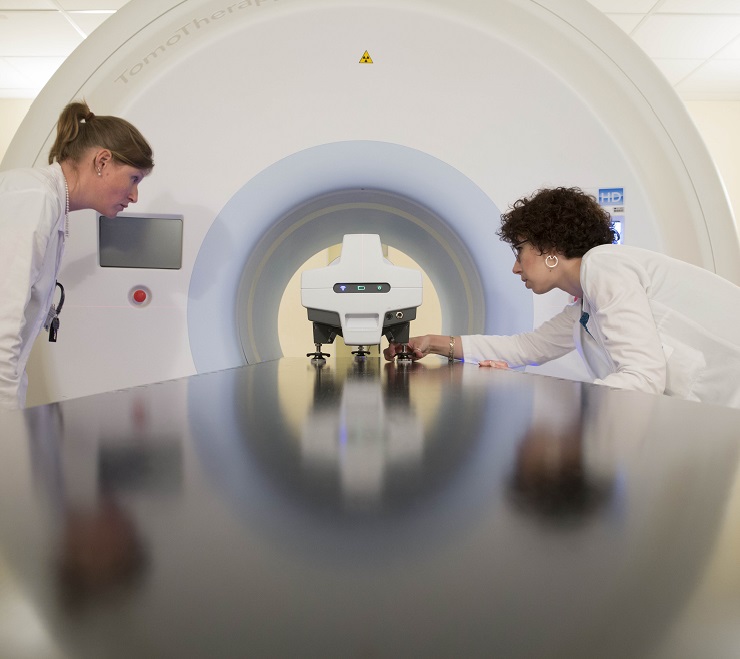
IEO Radiotherapy Division is among the top 10 in the world for treatment, research and technology with more than 50,000 radiotherapy treatments per year. In addition, thanks the recent opening of the IEO Proton Center, directly connected to the Radiotherapy Division, IEO offers the most advanced radiotherapy treatments to patients.
Proton therapy is a very high precision radiotherapy which has two important clinical advantages: the sparing of healthy tissues surrounding the target volumes (resulting in a reduced risk of side effects), as well as the possibility, in specific clinical situations, of administering higher doses to the tumour increasing the probability of recovery
The IEO Proton Center guarantees the patient’s full integration in the IEO’s treatment pathways, based on multidisciplinary approach, excellence and taking care of the person as a whole.
Since its opening at the end of 2023, more than 160 patients have completed treatment with Proton Therapy, and more than 170 patients are starting treatment.
Interventional Radiology
Interventional Radiology is a modern branch of medicine, with very high technological content, that represents the union between instrumental diagnostics and clinical-surgical activity, deriving originally from a super-specialist branch of Diagnostic Radiology.
The IEO Division of Interventional Radiology performs more than 1,500 procedures per year and, in close multidisciplinary collaboration with the other divisions, therefore deals with
• the clinical management of the patient, taking care of clinical problems from diagnosis
(including biopsy) to minimally invasive treatment of neoplastic lesions
• the minimally invasive management of post-surgical clinical complications, such as the control of haemorrhages and the drainage of abscess collections
Among the main ‘interventional’ activities that are now considered standard in clinical oncology, the treatment of primary and metastatic liver tumours, the percutaneous (non-surgical) treatment of small renal tumours and lung metastases should be mentioned.
Nuclear Medicine
The Division of Nuclear Medicine conducts clinical and research activities in the fields of molecular imaging and radionuclide therapy for oncological and onco-haematological conditions.
Performing more than 12,500 tests per year, the division is equipped with the most advanced diagnostic tools capable of early identification and precise localization of cancer cells, both in primary tumours and in the search for metastases.
The diagnostic techniques used are PET (Positron Emission Tomography), SPECT (Single Photon Emission Computed Tomography), and the more common Scintigraphy.
The division has two hybrid PET/CT scanners (GE Healthcare Discovery MI), a hybrid SPECT/CT scanner (GE Healthcare NM/CT 860), and a single-head gamma camera (GE Healthcare Millennium). It also has a “protected” inpatient unit, consisting of two rooms dedicated to radio-receptor therapy for metastatic prostate cancer and neuroendocrine tumors.
Haematoncology
The Hemato-oncology Division offers comprehensive treatments for all patients presenting with hematological malignancies. Following international guidelines, the Division combines innovative research discoveries with the best clinical treatment to improve outcomes for patients.
The IEO Hemato-oncology Division is characterised by state-of-the-art infrastructure, including 20-bed Haematoncology Ward, 9 single rooms dedicated to transplant/cell therapy and several dedicated outpatient facilities.
With more than 300 patients treated per year, the daily commitment of the Division focuses on:
• Innovative treatment strategies: for Hodgkin and non-Hodgkin Lymphoma, Acute Myeloid/Lymphoid Leukemia
• Cell therapy: Autologous and Allogeneic Stem Cell Transplant (60 procedures in the last year) CAR-T cell therapy (20 treatments per year)
• Innovative clinical trials: the Division records more than 30 active clinical trials, covering early and later lines of treatment in a wide range of haematologic malignancies, including rare lymphomasubtypes and unmet medical needs (e.g. peripheral T-cell lymphoma, high-grade B-cell lymphoma, high-risk acute myeloid leukemia, refractory chronic myeloproliferative neoplasms)
The multidisciplinary team, composed by specialized professional figures, including 20 Nurses, 10 Hematology Physicians, 4 Resident Doctors developed the so called IEO CARE 24, a dedicated service for clinical emergencies.
New Drug Development
The Department of Development of New Drugs for Innovative Treatments (DITEP) is strongly motivated to develop innovative approaches to cancer treatment through the transition to personalized medicine.
Precision medicine involves conducting clinical trials on new, more effective therapeutic interventions, streamlining procedures, improving patient selection, and more effectively defining study objectives. DITEP is transforming the infrastructure of clinical projects from general oncology for the broader population to one tailored for personalized oncology. To do this, with almost 700 active clinical trials, DIPET focuses its medical and scientific expertise on several key areas:
• Development of New Drugs: Accelerating the development of anticancer drugs for all types of cancers, including biologic agents and cell therapies, to improve the quality of life and survival of cancer patients.
• Personalized Treatments: Creating personalized therapeutic pathways with targeted drugs based on specific biomarkers for each type of cancer.
• Tailored Therapies: Developing customized therapies for patient subgroups identified by specific biomarkers, including targeted treatments for “druggable” mutations in clinical trials.
• Less Toxic Formulations: Developing new formulations and administration methods to reduce the toxicity of existing drugs.
• Therapeutic Innovation: Promoting innovation in therapeutic approaches through new research strategies, clinical trial designs, and the efficient use of resources.
• Scientific Collaboration: Supporting and collaborating with scientific laboratories to discover new drugs, identify targets and mechanisms of resistance, and promote clinical trials.

Breast Cancer
Proton Therapy
Interventional radiology
ORGANIZATION FIGURES
| YEARLY PATIENTS | 137,570 |
| NUMBER OF BEDS | 307 |
| SURGERY PROCEDURES PER YEAR | 14,930 |
| RADIOTHERAPY TREATMENTS PER YEAR | 50,000 |
| ACTIVE CLINICAL TRIAL | 698 |
OPENING HOURS
| Monday – Friday | 10:00 – 17:00 |
+39 02 5748 9330
ADDRESS
Via Ripamonti 435, 20141 Milano – Italy
SOCIAL

patients and their families

OUR PATIENTS SAY
At IEO, our work organization is always centered around patients’ needs and based on service excellence.
That’s why we believe patient feedback is essential to improving our services for international patients.

“Many thanks for the kind, friendly, and excellent attention I received at IEO, and for the continuous support given to me.”

“Being welcomed and escorted the first days at IEO really helped with the staying at the hospital”
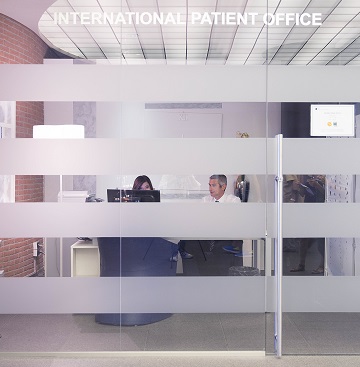
“Having just one office, the international one, that I can refer all my questions is really helpful for a patient”
