CNAO EXPANSION REAFFIRMS PAVIA’S GLOBAL LEADERSHIP IN HADRONTHERAPY
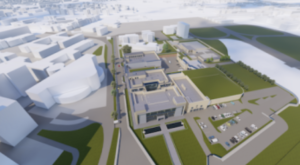
Fondazione CNAO, Italy’s National Centre for Oncological Hadrontherapy based in Pavia, has launched an ambitious expansion project, set for completion in 2026, to introduce a new building immediately adjacent to the existing facility. The project includes:
-
A second proton accelerator
-
A brand-new rotating gantry treatment room, enabling multi-angle irradiation
-
A compact neutron source for next-generation Boron Neutron Capture Therapy (BNCT)
-
Expanded patient reception spaces and research laboratories within a 4,000 m² structure
This initiative, backed by a €10 million investment—€3.8 million funded by Regione Lombardia—represents CNAO’s strategic evolution into “CNAO 2.0,” positioning it as a truly multi-ion therapy hub and the first European centre to combine proton, carbon, and neutron treatments under one roof.
Key partnerships are driving innovation:
-
HiFuture (Teoresi Group) and INFN are collaborating under the INSpIRIT project, developing a third particle source capable of generating multiple ion species, and upgrading control systems, dose software, and accelerator components.
-
TAE Life Sciences is installing a BNCT-capable compact accelerator, supporting treatment research in 2026.
In parallel, CNAO has been selected to co-lead the new European Network of Hi-tech Medical Resources, under the leadership of President Gianluca Vago. The network aims to harmonize access to advanced therapies—including hadrontherapy—and promote equity in cancer treatment across Europe.
This expansion builds on two decades of success: since its first treatments in 2011, CNAO has treated around 3,700 patients using proton and carbon ion therapy, and achieved milestones like the world’s first proton-based cardiac arrhythmia treatment in 2020.
Why this matters for medical tourists:
-
Unmatched treatment options: Access a centre offering proton, carbon ion, and soon neutron therapies.
-
Innovative infrastructure: Benefit from the latest in gantry technology and multi-ion beam capabilities.
-
Research-driven care: Treatments evolve from active R&D supported by national and European networks.
-
Global partnerships: Collaborations with universities, INFN, HiFuture, and TAE demonstrate forward-thinking excellence.
Fondazione CNAO’s expansion solidifies its status as a global leader in particle therapy. For international patients seeking world-class cancer treatment with advanced modalities, Pavia’s CNAO offers innovative solutions rooted in excellence and scientific collaboration.
References: CNAO News
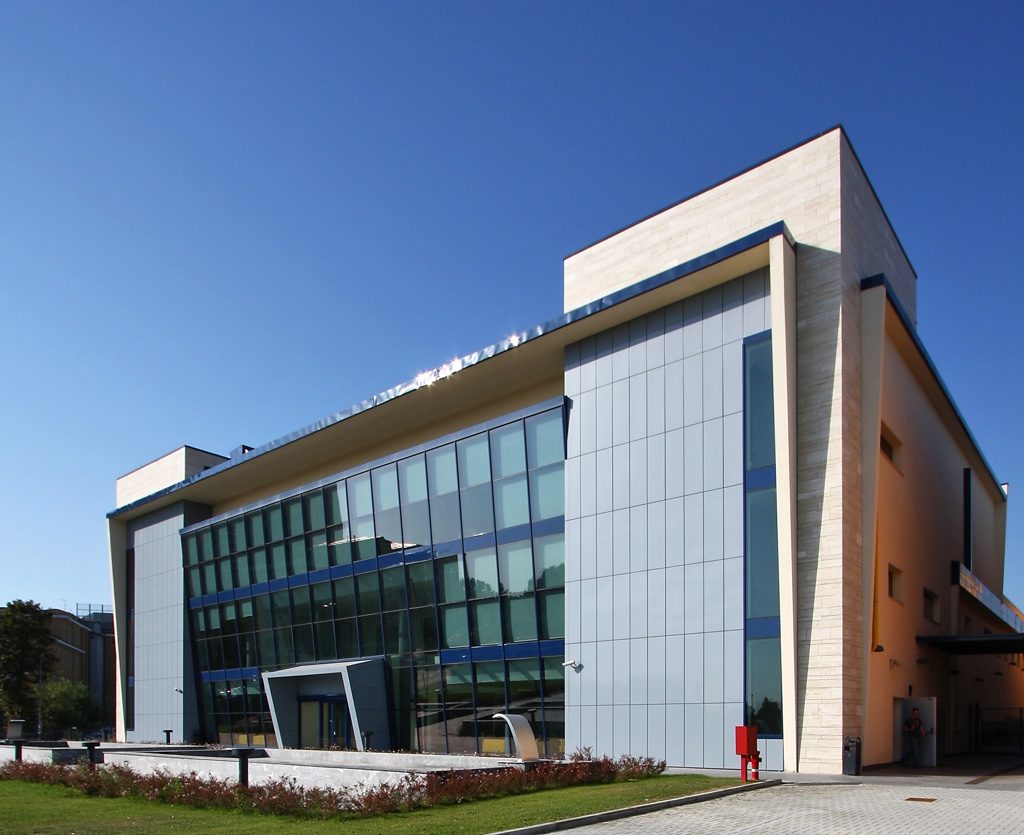
Worldwide, only six facilities have the capacity to perform hadrontherapy treatments using protons and carbon ions. One of these is located in Pavia, just half an hour away from Milan: the CNAO, National Centre for Oncological Hadrontherapy, the only centre in Italy able to perform this task.
LEARN MORE
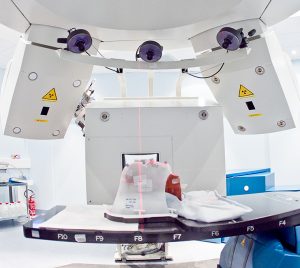
Hadrontherapy is a form of radiotherapy for the treatment and cure of tumours that are often surgically inoperable (located in particularly difficult locations) or resistant to traditional radiotherapy treatments (they do not respond sufficiently or adequately to the X-rays used in traditional radiotherapy). Since 2017, the Italian national healthcare service has incorporated this therapy into its basic service offerings.
Hadron therapy is based on the use of protons and carbon ions. Hadrons, atomic particles used in the therapy named after them, are more effective in destroying cancer cells than electrons due to their increased weight and energy.
To achieve precise tumour targeting, hadrons must undergo strong acceleration using a particle accelerator. At the National Centre for Oncological Hadron Therapy (CNAO) in Pavia, Italy, the treatment process occurs within the “synchrotron”, an 80-metre ring of medical equipment that links to the treatment rooms where patients receive care.
The synchrotron provided to the CNAO in Pavia is the sole unit in Italy that can extract carbon ions from the atom, which are the most potent particles, to treat tumours that resist conventional radiotherapy or are inoperable. There are only five other centres worldwide capable of achieving this.
Reference: For more information, please refer to the Hadrontherapy: Synchrotron webpage
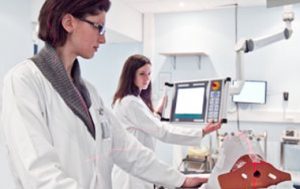 The number of hadron therapy sessions necessary varies based on various factors, including the type of particle used, tumour type, size, and location. Typically, individuals require one session per day, five days a week, for 2 to 7 weeks.
The physical characteristics of carbon ions and protons utilized in hadron therapy provide several significant benefits over conventional radiotherapy.
The treatment of radioresistant tumours is possible with a high level of precision which helps in preserving healthy tissue.
The combination of these advantages results in a considerable destructive effect on the tumour tissue, making it a crucial requirement to position the tumour with millimetre accuracy, far more precise than conventional radiotherapy. The combination of these advantages results in a considerable destructive effect on the tumour tissue, making it a crucial requirement to position the tumour with millimetre accuracy, far more precise than conventional radiotherapy. Additionally, personalisation of the treatment at each phase further contributes to enhancing the treatment outcome. The combination of these advantages results in a considerable destructive effect on the tumour tissue, making it a crucial requirement to position the tumour with millimetre accuracy, far more precise than conventional radiotherapy.
Patients can determine if their cases or pathologies are treatable with hadron therapy by consulting the CNAO Foundation’s website. See
Upon verifying their eligibility, patients can learn about the preliminary assessment and subsequent steps required to begin treatment. Confirmation of eligibility will be granted after the first visit. See